By Darcie Flansburg
Real Critics Editor/Publisher
It's hard to criticize a show with adorable and talented children. Their presence on stage is often enough to make an audience member smile. And when the play is "A Christmas Story" the children also get to perform in a humorous and genuine manner.
Chino Community Theatre's production of "A Chritsmas Story" was performed well enough to be enjoyable. Opening night had its gliches, but what opening night doesn't? Some of these hiccups, however, were a bit hard to ignore.
The story follows Ralph Parker in his quest for the ultimate Christmas present -- an official Red Ryder, carbine action, two-hundred shot range air rifle. But every adult that hears young Ralphie's plea has the same response -- "you'll shoot your eye out, kid!"
Ralphie is surrounded by a cast of characters. His father is stingy and easily-angered, while his mother spends her time trying to ease her husband and encourage her children in anyway possible. Ralphie's brother Randy doesn't know how to eat and is always hiding, and his friends Flick and Schwartz spend their time running from the class bully and daring each other to do crazy things.
The script in and of itself is enough to hold the audiences attention, but the young actors in this production performed beyond their years.
Andy Polder was born for the part of Ralphie. This was the 5th grader's first time on stage and hopefully not his last. He has a true talent, mastering the many facial expressions and smart antics of Ralphie Parker.
Patrick Gibbons played Flick to a tee. He performed with honesty and intention, which came in handy for the famous tongue stuck to a frozen pole scene.
Ryan Adams rounded out the trio of friends as Schwartz.
The friends had a natural chemistry together that was often broken up by Scut Farkas, the bully, played by Jayson Bender. Bender's charming headshot in the program is deceiving; the young actor is an excellent villain.
Bill Becker's portrayal of The Old Man, Ralphie's father, was another winning casting choice. Becker's entrances were classic, his bizarre cursing humorous, and his endearing moments very touching.
Where the production fell flat was in the tech. There were several instances where lights flashed on and off by mistake, or props were not set.
It was really unfortunate at the end of the show when Ralphie's father tells Ralphie that there is one last Christmas gift (the air rifle), but the prop was never placed on stage. Becker and Sarah Beth Hall (Mother) covered as best they could, but it was a situation that was easily preventable.
Despite minor shortfalls the production was heartwarming and very enjoyable. The decision to go outside the norm of Christmas show usuals was also appreciated. Therefore a theatre experience worth having.
Chino Community Theatre, "A Christmas Story," 13123 7th Steer, Chino Ca, www.chinocommunitytheatre.org, 8 p.m. Friday and Saturday, 2:30 p.m. Sunday, Dec. 3 through 18, $15 for General Admission, $12 for students and seniors (55+).
Thursday, December 9, 2010


Saturday, December 4, 2010
The Cure for the Common Christmas Play
By Gabriel Morales
For the Real Critics Blog
Seen "The Compleat Wrks of Wllm Shkspr (Abridged)"? Like it? Love it? Well, fugeddaboutit! That show's got nothin' on it's frenetic holiday doppelganger, "Every Christmas Story Ever Told (and Then Some!)" now playing at Inland Stage in San Jacinto. Imagine Robin Williams was cloned twice, all three went off their Ritalin, then their legion of personalities went on a crack-fueled mimic-a-thon of beloved holiday characters (B.H.C.'s), and you're half way there.
Frosty, Rudolph, Macy's, Dickens, Tchaikovsky, the Grinch, Charlie Brown, random audience members whisked on stage -- no one's safe in this hilariously irreverent torrent-of-haphazard-consciousness. A sugar plum rave, if you will. Nimbly directed by Marcy Wright, actors John Wesley Leon, Kristofer James and Gabriel Diaz are your madcap guides through this winter whirl-land. With on point impressions, impeccable timing, and absurdly stoic dance routines the trio are sure to leave your voice hoarse, smiling cheeks numb, and mascara running from irrepressible laughter.
Still hankerin' for your annual doses of "Christmas Carol" and "It's a Wonderful Life"? No, worries. Act Two fuses their best moments into a whole that's greater than it's individual parts: "It's a Wonderful Carol," complete with George and Scrooge, Clarence and the Ghosts, Zuzu and Tiny Tim. And at a brisk 20 minutes it's certainly the funniest, and most bearable version of the traditional tedium that you'll ever see.
Whether you're suffering from the sniffles, theatrical deprivation or general holiday Scrooginess, laughter of course is the best medicine. So ask your doctor about a weekend prescription for "Every Christmas Story Ever Told (and Then Some!)," the cure for the common Christmas play. (Not recommended for very pregnant women or people with severe heart conditions.)

ISC's "Every Christmas Story Ever Told" runs through Dec. 19 at the Esplanade Art Center in San Jacinto.
For the Real Critics Blog
Seen "The Compleat Wrks of Wllm Shkspr (Abridged)"? Like it? Love it? Well, fugeddaboutit! That show's got nothin' on it's frenetic holiday doppelganger, "Every Christmas Story Ever Told (and Then Some!)" now playing at Inland Stage in San Jacinto. Imagine Robin Williams was cloned twice, all three went off their Ritalin, then their legion of personalities went on a crack-fueled mimic-a-thon of beloved holiday characters (B.H.C.'s), and you're half way there.
Frosty, Rudolph, Macy's, Dickens, Tchaikovsky, the Grinch, Charlie Brown, random audience members whisked on stage -- no one's safe in this hilariously irreverent torrent-of-haphazard-consciousness. A sugar plum rave, if you will. Nimbly directed by Marcy Wright, actors John Wesley Leon, Kristofer James and Gabriel Diaz are your madcap guides through this winter whirl-land. With on point impressions, impeccable timing, and absurdly stoic dance routines the trio are sure to leave your voice hoarse, smiling cheeks numb, and mascara running from irrepressible laughter.
Still hankerin' for your annual doses of "Christmas Carol" and "It's a Wonderful Life"? No, worries. Act Two fuses their best moments into a whole that's greater than it's individual parts: "It's a Wonderful Carol," complete with George and Scrooge, Clarence and the Ghosts, Zuzu and Tiny Tim. And at a brisk 20 minutes it's certainly the funniest, and most bearable version of the traditional tedium that you'll ever see.
Whether you're suffering from the sniffles, theatrical deprivation or general holiday Scrooginess, laughter of course is the best medicine. So ask your doctor about a weekend prescription for "Every Christmas Story Ever Told (and Then Some!)," the cure for the common Christmas play. (Not recommended for very pregnant women or people with severe heart conditions.)

ISC's "Every Christmas Story Ever Told" runs through Dec. 19 at the Esplanade Art Center in San Jacinto.
Sunday, November 7, 2010
Hilarious 'Yesterday,' Today and Always
By Gabriel Morales
For the Real Critics Blog
With a cast led by veritable I.E. acting legends, ever-versatile comedian-director John Lynd has created another landmark Redlands Footlighters production in Garson Kanin's "Born Yesterday."
Set in 1946, Kanin's engrossing guys-and-a-doll political satire is just as funny, just as relevant 70 years later -- perhaps more so as the audience soon realizes (the week after the 2010 mid-term pseudo-political circus) that nothing has changed. Brutish business moguls still rough-hand bribed politicians into passing legislation that facilitates -- even encourages and subsidizes -- the manufacturing and peddling of carcinogenic and/or works-'til-just-after-the-warranty-expires junk; while we the little people are forced to fend for and educate ourselves in a quickly tarnishing gilded cage for which we're supposed to be grateful. Lynd's deft direction and pacing does well by Kanin's complex, fast-paced romp, highlighting the sight gags and big jokes, subtle pathos and ironies that make this text one for the ages.
With effortless sensuality and razor-sharp comedic timing, Founder's Award-worthy Ali Rafter shines as ex-chorus girl Billie Dawn, the delectably feminine center around which the ruthless masculine political-industrial machine whirls. Fresh out of the Great Depression I and World War II decades, Billie is content with her kept-woman status, well aware that willful stupidity and the occasional returned favor earns her anything her heart desires. Hear that America, why fight to preserve your individuality and independence when you can shut up, cooperate and have the dominating parties provide your needs? It worked for Billie... that is, until her semi-abusive sugar daddy hires political reporter Paul Verall (gracefully played by classically trained Phillip Gabriel) to smarten her up, smooth out the rough Jersey edges so she can fit into the more two-faced, delicately evil Washington social paradigm. Billie and Paul fall for each other, of course, and besides a plethora of new words Billie eventually learns enough to turn her oppressors' love of money and shady dealings against them, thus securing her freedom in a happy albeit blindly optimistic ending. The thuggish, roguish boor responsible for Billie's financial prosperity and emotional enslavement? Self-made millionaire goodfella Harry Brock, a.k.a. Mel Chadwick, who turns in yet another tour de force character study. From bipolar relationship -- er, arrangement -- with Billie, to awkward put-on gentility around Washington's upper crust, to vociferous wrath when plans begin going awry, Chadwick illuminates Brock's faults with all the endearing grace of your favorite Soprano character. (And his gin rummy game with Rafter is pure comedic gold!)
The always impressive sultry-voiced Sam Nisbett plays Ed Devery, Brock's high-priced lawyer and political intermediary. Despite being in three shows simultaneously, Nisbett delivers as the quick-witted, perpetually inebriated best friend -- a wholly new, fully realized presentation as truthful and enthralling as his mesmerizing turn as Chief Bromden in last month's CCT production of "One Flew Over the Cuckko's Nest." Additionally, the rest of the supporting cast brings poignant moments and huge laughs to the skillfully designed and dressed set. Barry Wallace and Janet Hodge play well as the stuffy Washington couple opposite the new money Jersey imports. Henry Nickel ("Eddie Brock") brings the funny as the nasally voiced, bumbling errand boy cousin; Lynd has an excellent cameo as the skittish hotel concierge; and in the quintessential gangster shaving scene, Tom Cain ("Barber") uses too much cream to uproarious effect.
Visit www.redlandsfootlighters.org for details.
For the Real Critics Blog
With a cast led by veritable I.E. acting legends, ever-versatile comedian-director John Lynd has created another landmark Redlands Footlighters production in Garson Kanin's "Born Yesterday."
Set in 1946, Kanin's engrossing guys-and-a-doll political satire is just as funny, just as relevant 70 years later -- perhaps more so as the audience soon realizes (the week after the 2010 mid-term pseudo-political circus) that nothing has changed. Brutish business moguls still rough-hand bribed politicians into passing legislation that facilitates -- even encourages and subsidizes -- the manufacturing and peddling of carcinogenic and/or works-'til-just-after-the-warranty-expires junk; while we the little people are forced to fend for and educate ourselves in a quickly tarnishing gilded cage for which we're supposed to be grateful. Lynd's deft direction and pacing does well by Kanin's complex, fast-paced romp, highlighting the sight gags and big jokes, subtle pathos and ironies that make this text one for the ages.
With effortless sensuality and razor-sharp comedic timing, Founder's Award-worthy Ali Rafter shines as ex-chorus girl Billie Dawn, the delectably feminine center around which the ruthless masculine political-industrial machine whirls. Fresh out of the Great Depression I and World War II decades, Billie is content with her kept-woman status, well aware that willful stupidity and the occasional returned favor earns her anything her heart desires. Hear that America, why fight to preserve your individuality and independence when you can shut up, cooperate and have the dominating parties provide your needs? It worked for Billie... that is, until her semi-abusive sugar daddy hires political reporter Paul Verall (gracefully played by classically trained Phillip Gabriel) to smarten her up, smooth out the rough Jersey edges so she can fit into the more two-faced, delicately evil Washington social paradigm. Billie and Paul fall for each other, of course, and besides a plethora of new words Billie eventually learns enough to turn her oppressors' love of money and shady dealings against them, thus securing her freedom in a happy albeit blindly optimistic ending. The thuggish, roguish boor responsible for Billie's financial prosperity and emotional enslavement? Self-made millionaire goodfella Harry Brock, a.k.a. Mel Chadwick, who turns in yet another tour de force character study. From bipolar relationship -- er, arrangement -- with Billie, to awkward put-on gentility around Washington's upper crust, to vociferous wrath when plans begin going awry, Chadwick illuminates Brock's faults with all the endearing grace of your favorite Soprano character. (And his gin rummy game with Rafter is pure comedic gold!)
The always impressive sultry-voiced Sam Nisbett plays Ed Devery, Brock's high-priced lawyer and political intermediary. Despite being in three shows simultaneously, Nisbett delivers as the quick-witted, perpetually inebriated best friend -- a wholly new, fully realized presentation as truthful and enthralling as his mesmerizing turn as Chief Bromden in last month's CCT production of "One Flew Over the Cuckko's Nest." Additionally, the rest of the supporting cast brings poignant moments and huge laughs to the skillfully designed and dressed set. Barry Wallace and Janet Hodge play well as the stuffy Washington couple opposite the new money Jersey imports. Henry Nickel ("Eddie Brock") brings the funny as the nasally voiced, bumbling errand boy cousin; Lynd has an excellent cameo as the skittish hotel concierge; and in the quintessential gangster shaving scene, Tom Cain ("Barber") uses too much cream to uproarious effect.
Visit www.redlandsfootlighters.org for details.
Wednesday, October 20, 2010
Worth the Trip, Worth the Truth
By Rebecca Williams
For the Real Critics Blog
A Streetcar Named Desire: a multi-faceted, intricate piece of literature by Tennessee Williams, produced by Inland Stage Company, is worth the trip, and worth the truth.
The richness of the text yields itself worthy of being seen, especially with one particularly admirable performance; however, the production seemed to lack a certain essential dynamic between the characters -- a dynamic that was removed by choice, to the detriment of the show.
Streetcar is about the cultural collision between Stanley Kowalski, an urban working-class man of passion, violence and control, and Blanche Dubois a refined and fading Southern bell.
As the play unfolds we discover Blanche’s air of sophistication is a mask for her promiscuous lifestyle, perpetuated by the discovery of her first love’s homosexual relationship and resulting suicide.
This clash between their two passions should be manifested and felt throughout the play.
Unfortunately, it was stifled by the choice to focus instead on the uncomfortable awkwardness of having an unwelcomed house guest. Although this is an aspect of the text to be examined, it is not an emotionally deep choice and weakens the conflict of the play.
Additionally, there was the removal of the end of the climactic scene, where Stanley returns home drunk after celebrating the birth of his child only to discover a drunk and fanciful-minded Blanche, who he advances on and rapes.
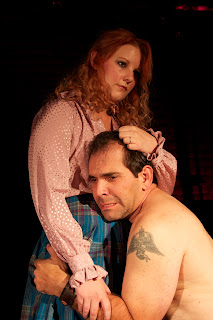
This final event that sends the misguided and wounded woman over the edge was not seen in Inland Stage’s production -- leaving me, and audience members who might not know the story, perplexed as to why she is being committed to a mental institution in the final scene. Yes, she has obviously had a nervous break down, but why?
Despite the removal of such an important moment, the estimable performance of Rosalyn Leon as Blanche Dubois was engaging.
From an elevated emotional high, to confusion and worn nerves, to drunken tears -- Rosalyn lived Blanche with grace and clarity. Her in-the-moment focus pulled you into her world and the humanity of the drama. With such effort, and her behind-the-scenes hard work obviously in place, it was a shame that the complex relationship layers were stripped away.
On the other hand, John Wesley Leon, portraying Stanley Kowalski, had a put-on casualness in place of realism. He was too likeable. His depiction of Stanley was anything but animalistic, sensual, brutish -- “an ape.” He did not evoke any fear or strong physical presence; perhaps given to the directorial choice to diminish the overriding tension to the simple annoyance of a house guest.
Another shining light, Mary Vuong, captured the authenticity of Eunice’s raw aggression and feral womanliness. Kristofer James was commendable as Mitch; making a clear concentrative transition from the shy, wooing courtier to the deceived, condemning injured soul.
Overall, the true power and impact of the play was lost in the removal of the climactic scene, thus making Stanley just a reasonable, nice guy with a bit of a drinking problem. Nevertheless, this show is worth seeing for the quality of the text and some talented actors deserving of an audience.
"A Streetcar Named Desire" runs through Nov. 7 at the Esplanade Art Center in San Jacinto. Visit www.inlandstage.org for details.
For the Real Critics Blog
A Streetcar Named Desire: a multi-faceted, intricate piece of literature by Tennessee Williams, produced by Inland Stage Company, is worth the trip, and worth the truth.
The richness of the text yields itself worthy of being seen, especially with one particularly admirable performance; however, the production seemed to lack a certain essential dynamic between the characters -- a dynamic that was removed by choice, to the detriment of the show.
Streetcar is about the cultural collision between Stanley Kowalski, an urban working-class man of passion, violence and control, and Blanche Dubois a refined and fading Southern bell.
As the play unfolds we discover Blanche’s air of sophistication is a mask for her promiscuous lifestyle, perpetuated by the discovery of her first love’s homosexual relationship and resulting suicide.
This clash between their two passions should be manifested and felt throughout the play.
Unfortunately, it was stifled by the choice to focus instead on the uncomfortable awkwardness of having an unwelcomed house guest. Although this is an aspect of the text to be examined, it is not an emotionally deep choice and weakens the conflict of the play.
Additionally, there was the removal of the end of the climactic scene, where Stanley returns home drunk after celebrating the birth of his child only to discover a drunk and fanciful-minded Blanche, who he advances on and rapes.

This final event that sends the misguided and wounded woman over the edge was not seen in Inland Stage’s production -- leaving me, and audience members who might not know the story, perplexed as to why she is being committed to a mental institution in the final scene. Yes, she has obviously had a nervous break down, but why?
Despite the removal of such an important moment, the estimable performance of Rosalyn Leon as Blanche Dubois was engaging.
From an elevated emotional high, to confusion and worn nerves, to drunken tears -- Rosalyn lived Blanche with grace and clarity. Her in-the-moment focus pulled you into her world and the humanity of the drama. With such effort, and her behind-the-scenes hard work obviously in place, it was a shame that the complex relationship layers were stripped away.
On the other hand, John Wesley Leon, portraying Stanley Kowalski, had a put-on casualness in place of realism. He was too likeable. His depiction of Stanley was anything but animalistic, sensual, brutish -- “an ape.” He did not evoke any fear or strong physical presence; perhaps given to the directorial choice to diminish the overriding tension to the simple annoyance of a house guest.
Another shining light, Mary Vuong, captured the authenticity of Eunice’s raw aggression and feral womanliness. Kristofer James was commendable as Mitch; making a clear concentrative transition from the shy, wooing courtier to the deceived, condemning injured soul.
Overall, the true power and impact of the play was lost in the removal of the climactic scene, thus making Stanley just a reasonable, nice guy with a bit of a drinking problem. Nevertheless, this show is worth seeing for the quality of the text and some talented actors deserving of an audience.
"A Streetcar Named Desire" runs through Nov. 7 at the Esplanade Art Center in San Jacinto. Visit www.inlandstage.org for details.
Thursday, September 30, 2010
RCP's 'Six Dance Lessons' is Touching and Profound
By Darcie Flansburg
Real Critics Editor/Publisher
In Richard Alfieri’s Six Dance Lessons in Six Weeks, Lily Harrison gets more than dance lessons from instructor Michael Minetti. Though dance lessons are the name of the game, the duo also gains a close kinship and they both come to better understand themselves and their worlds through their weekly interactions.
Six Dance Lessons in Six Weeks is not only a touching play, but also a pertinent play for the Inland Empire. And the Rialto Community Players’ production portrayed the charming story with engaging and humorous probity.
Though I can be easily moved to tears by what is performed on stage, I am not a laugh-out-loud audience member. But this play had me both laughing and crying, as well as being moved by something much deeper.
Real Critics Editor/Publisher
In Richard Alfieri’s Six Dance Lessons in Six Weeks, Lily Harrison gets more than dance lessons from instructor Michael Minetti. Though dance lessons are the name of the game, the duo also gains a close kinship and they both come to better understand themselves and their worlds through their weekly interactions.
Six Dance Lessons in Six Weeks is not only a touching play, but also a pertinent play for the Inland Empire. And the Rialto Community Players’ production portrayed the charming story with engaging and humorous probity.
Though I can be easily moved to tears by what is performed on stage, I am not a laugh-out-loud audience member. But this play had me both laughing and crying, as well as being moved by something much deeper.
In the play, Lily Harrison (Deborah W. McFatter), an elderly widow, is getting personal dance lessons at her home from the Six Dance Lessons in Six Weeks company. Minetti (Christopher Diehl) is Lily’s gay instructor with foot-in-mouth syndrome. The two get off to a rough start, but eventually overcome each others’ lying and arguing to become fast friends.
McFatter is a regular actress in the Inland Empire theater community and there is good reason that she is often cast in local productions; she is a lovely and brilliant actress. Her portrayal of Lily was heart-warming and liberating; she presented every elderly woman stereotype with lovely sensitivity, then quickly and poignantly revealed the logic behind her ways.
McFatter is always a joy to see and this play was no exception.
Diehl played Minetti to a tee. He was infuriating, clever and emotionally deft. Deihl’s Michael was the perfect foil to McFatter’s Lily; opposing yet loving, hard yet soft.
The mark of a strong realism play is when the characters not only reveal themselves to each other in a very personal way, but also in how they reveal themselves to the audience. McFatter’s Lily showed the audience how lonely and scary it can be to be an elderly widow. And Diehl’s Michael showed how lonely and frustrating it can be to be gay in the South. Both presented humorous and insightful performances that not only engaged the audience, but made them think.
McFatter and Deihl also reprised their roles for this production, which allowed them to get even deeper into the characters’ intentions. It was also very clear why they were cast the first time. The two actors are naturals and the realism of their actions and interactions made the play that much more honest and therefore enjoyable.
Sandy Courtney and Kerry Jones’ set design was also stunning. The set added to the realism of the characters and the voyeuristic feeling of the audience. The window center stage was regularly referred to throughout the play and the designers, including lighting designer Val Hanson, did an excellent job creating the ambience in the high rise building.
Though the plot may seem simple or cliché, Six Dance Lessons in Six Weeks offers moments of clarity and insight that is furthered by RCP Director Jeff Richards’ vision and McFatter and Diehl’s performances; a profoundly enchanting theatre experience.
Rialto Community Players, "Six Dance Lesson in Six Weeks," 150 E. San Bernardino Ave., Rialto Ca, www.rialtocommunityplayers.org, 8 p.m. Friday and Saturday evenings, 2 p.m. Saturdays and Sundays, Sept. 18 through Oct. 3, General admission is $15 and $12 for students with ID and seniors.
Thursday, August 26, 2010
Candlelight Pavilion Offers A Taste of Old Hollywood
By Darcie Flansburg
Real Critics Editor Publisher
Candlelight Pavilion's latest show has all the glitz and glam of old Hollywood complete with lit staircases, sparkling Ziegfeld Follies and a charming host.
"The Will Rogers Follies" portrays the life of famed humorist Will Rogers with grand dance numbers and classic songs.
 The show covers everything from the day Rogers was born to his death. The audience witnesses the moment when Rogers met his future wife, when he ran for president, and how the world reacted when Rogers' life was cut short by a tragic airplane accident. All the while Rogers plays to the audience and performs dance numbers with the Ziegfeld Follies.
Ziegfeld's voice is heard throughout the show, barking commands at Rogers as if the audience is interrupting a rehearsal. But this rehearsal includes flashbacks of Rogers' life.
Danny Michaels returned to Candlelight Pavilion to reprise the title role, a role that he has performed throughout Southern California. Michaels' smooth, sultry voice coupled with his sensitive charm and winning smile, won over the audience immediately. Audience members cooed and giggled in an enjoyment as Michaels made jokes and provided witty banter in between scenes and songs.
 Michaels' performance of "Never Met A Man I Didn't Like" was particularly touching.
This production marks the last time Michaels will be performing the role.
Lisa Dyson also reprised her role as Rogers' wife Betty Blake. Dyson and Michaels fit together like a glove, with sensational harmonies and disarming personalities.
Taking the show through Rogers' life is Zeigfeld's Favorite, played by Tracy Pedretti. Pedretti played Rogers' sidekick and Ziegfeld's liaison with great zeal. Her smile and laugh had the audience laughing and playing along with her antics.
Richard Malmos played Rogers' father Clem. Malmos' vocals and wily ways were always a pleasure, even when he was being disagreeable.
Some of the most enjoyable moments in the show involve the lovely Ziegfeld Follies. The ensemble of talented women brought a spirited and old fashioned flare that made everyone smile.
In the past, critics have had their problems with "The Will Rogers Follies" as a show. But this 11-time Tony nominated and 6-time Tony winning show will definitely provide a fun and insightful way to spend the evening.
 The 1991 Tony Award-winning Musical may be somewhat outdated, but many of Rogers' ideas and critiques about the world, which he reveals through humor, are very poignant today.
With the presence of Michaels as the leading man, backed by another strong Candlelight Pavilion cast, "The Will Rogers Follies" is delightful.
Candlelight Pavillion, "The Will Rogers Follies," 455 West Foothill Blvd., Claremont Ca, www.candlelightpavilion.com, 6 p.m. Thursday through Sunday, 11 a.m. Saturday and Sunday, Aug. 20 through Sept. 26, $48-$68 for General Admission, $25-$30 for children 12 and under
Real Critics Editor Publisher
Candlelight Pavilion's latest show has all the glitz and glam of old Hollywood complete with lit staircases, sparkling Ziegfeld Follies and a charming host.
"The Will Rogers Follies" portrays the life of famed humorist Will Rogers with grand dance numbers and classic songs.
 The show covers everything from the day Rogers was born to his death. The audience witnesses the moment when Rogers met his future wife, when he ran for president, and how the world reacted when Rogers' life was cut short by a tragic airplane accident. All the while Rogers plays to the audience and performs dance numbers with the Ziegfeld Follies.
Ziegfeld's voice is heard throughout the show, barking commands at Rogers as if the audience is interrupting a rehearsal. But this rehearsal includes flashbacks of Rogers' life.
Danny Michaels returned to Candlelight Pavilion to reprise the title role, a role that he has performed throughout Southern California. Michaels' smooth, sultry voice coupled with his sensitive charm and winning smile, won over the audience immediately. Audience members cooed and giggled in an enjoyment as Michaels made jokes and provided witty banter in between scenes and songs.
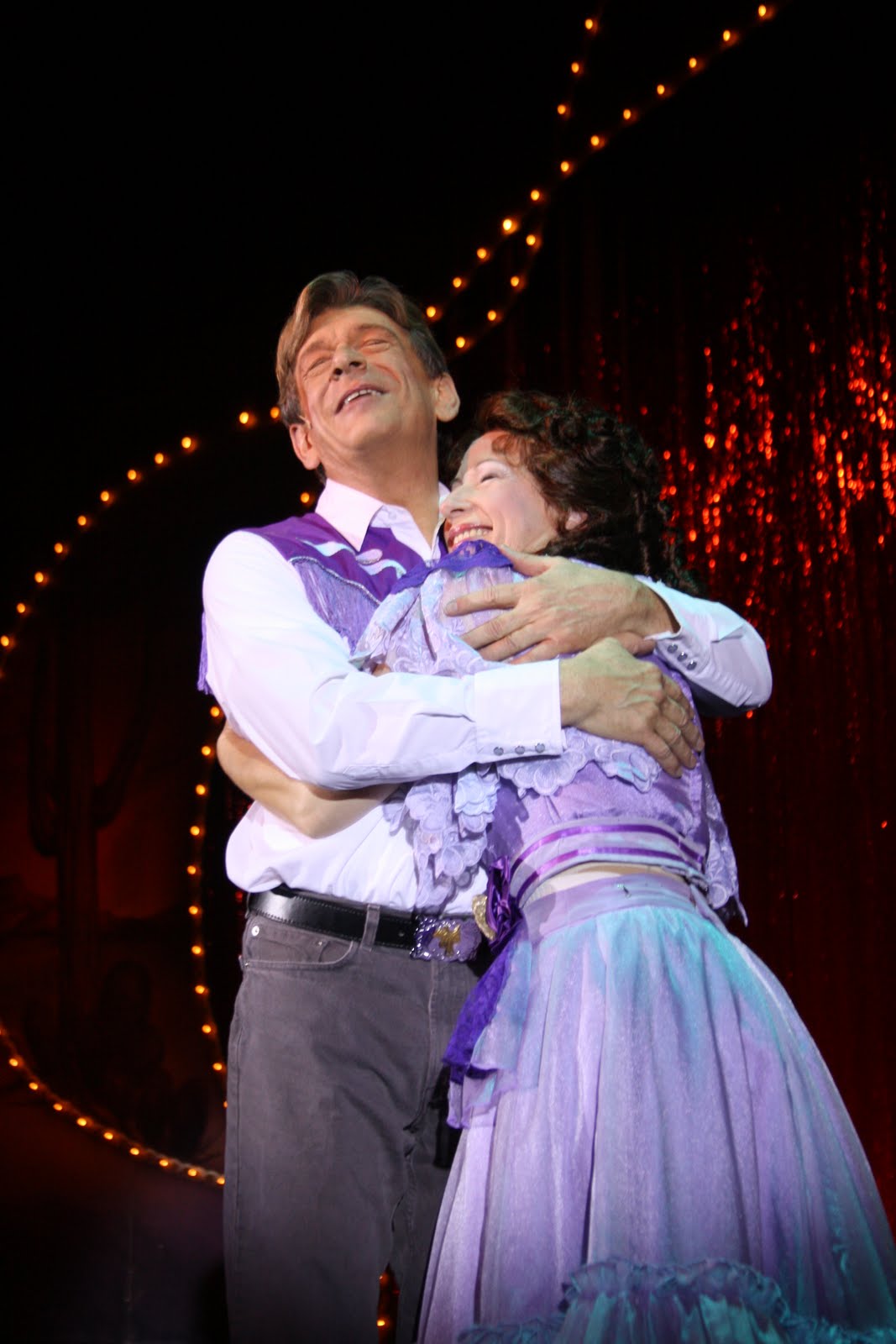 Michaels' performance of "Never Met A Man I Didn't Like" was particularly touching.
 This production marks the last time Michaels will be performing the role.
Lisa Dyson also reprised her role as Rogers' wife Betty Blake. Dyson and Michaels fit together like a glove, with sensational harmonies and disarming personalities.
Taking the show through Rogers' life is Zeigfeld's Favorite, played by Tracy Pedretti. Pedretti played Rogers' sidekick and Ziegfeld's liaison with great zeal. Her smile and laugh had the audience laughing and playing along with her antics.
Richard Malmos played Rogers' father Clem. Malmos' vocals and wily ways were always a pleasure, even when he was being disagreeable.
Some of the most enjoyable moments in the show involve the lovely Ziegfeld Follies. The ensemble of talented women brought a spirited and old fashioned flare that made everyone smile.
In the past, critics have had their problems with "The Will Rogers Follies" as a show. But this 11-time Tony nominated and 6-time Tony winning show will definitely provide a fun and insightful way to spend the evening.
 The 1991 Tony Award-winning Musical may be somewhat outdated, but many of Rogers' ideas and critiques about the world, which he reveals through humor, are very poignant today.
 With the presence of Michaels as the leading man, backed by another strong Candlelight Pavilion cast, "The Will Rogers Follies" is delightful.
Candlelight Pavillion, "The Will Rogers Follies," 455 West Foothill Blvd., Claremont Ca, www.candlelightpavilion.com, 6 p.m. Thursday through Sunday, 11 a.m. Saturday and Sunday, Aug. 20 through Sept. 26, $48-$68 for General Admission, $25-$30 for children 12 and under
Monday, August 23, 2010
Forgive Them, They're Foreign (to the Art)
By Bob Roberts
For the Real Critics Blog
Christian Arts and Theatre, or CAT Corona, as they’d rather be called - the non-pc bit safely tucked under the bushel of a cutesy acronym for convenience’s sake - presents yet another Christ-less production in the esteemed Larry Shue’s “The Foreigner.”
An aberration from their usual children’s musicals featuring dozens of fee-paying local youth (an awe-inspiring feat of salesmanship and shepherding if nothing else), “Foreigner” is their one “adult” (-cast) production of the year, and a shining example of the aphorism about adhering to one’s proficiencies.
Vicki Irvine directs Shue’s hilarious offering, highlighting some of the scripts vast jocularity.
Thankfully there is little useless blocking, i.e. the “cross to an upstage corner and stare into the Fresnel during the conversation’s climax” bit. Instead, Irvine’s ruptured Achilles is glacial pacing.
With all the painful transitions, awkward pauses and comedic unawareness, in Irvine’s hands Shue’s fast-paced comedy clocks in at a Shakespearean two and a half hours. Buyers beware: the current trend of changing curtain time to 7:30 from the age-old 8 p.m. doesn’t guarantee you’ll be getting home any earlier.
 Ken Lay turns in the most truthful performance of the night as “Froggy LeSueur.” Though his Cockney could have be crisper, his feet less shifty, Froggy’s most notable failing is his stunning lack of chemistry with long-time best mate “Charlie Baker.”
Even with his most heartfelt moments played to the floor and a little mugging notwithstanding, Roger Schoepf manages to create an endearing, beautifully voiced Charlie.
Unfortunately for CAT’s legion of aspiring artists - and more importantly its patrons - the rest of the grown up cast are not good examples of what a lifetime in the arts can accomplish.
Let us begin with Cyndi Monroe, who butchers the powerhouse female lead role of “Betty Meeks.”
Perhaps it’s naiveté on my part: but shouldn’t the Founder/Artistic Director of said theater company be knowledgeable in the art? Shouldn’t she be able to step on the stage and say, ‘See, this is how it’s done. This is why I am fit to lead’? Or, in the very least, shouldn’t she spare the audience the insult of not having her lines memorized? To her credit, Monroe doesn’t list acting among her many talents in the program, and infers an extended absence from the stage. P.S.: Louder does not equal funnier.
Still, the most inconsistent, poorly played characterization belongs to Isaac Monroe (“Ellard Meeks”).
Monroe’s performance is anything but funny, in spite of the incessant, obsequious tittering of the pubescent female audience members. Rather than creating a lovable human being, Monroe fills the gaps between his lifeless, unaccented recitations of longer sentences with cartoonish slack-jawing and spasmodic flailing, turning Shue’s “slow” character into the worst kind of stereotype.
Throughout the course of the play he unabashedly displays every evil schoolyard bully gesticulation one could imagine, short of drooling and pounding a bent wrist to his chest to the tune of “der-der-der.” Were I the parent of a special needs child, I very well could’ve stormed out of there with a barrage of profanity. And though I’m not, maybe I still should have.
Visit www.catcorona.org for details on upcoming CAT Corona productions.
Subscribe to:
Posts (Atom)
